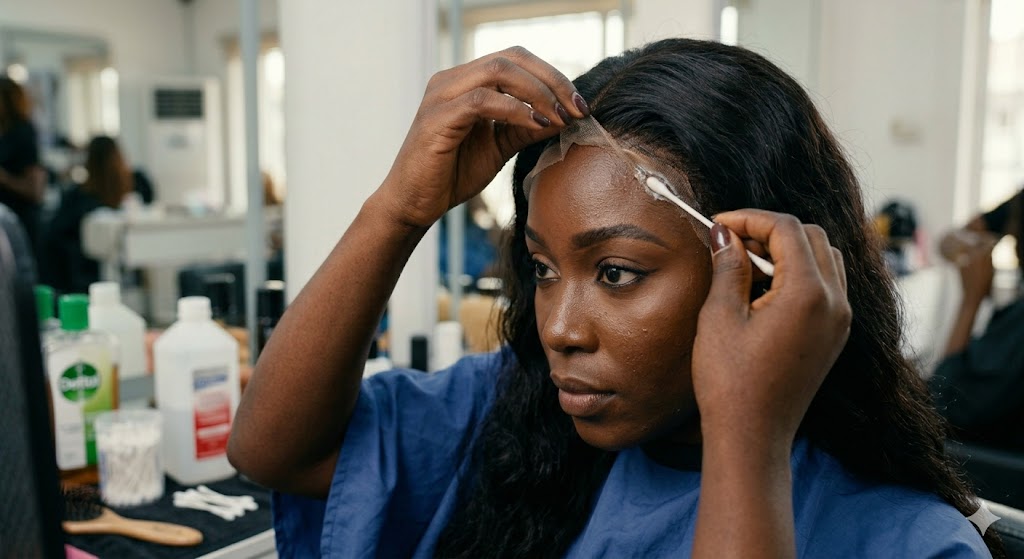
If you’re tired of watching your hard-earned money slowly peel away at your hairline after that pricey frontal installation, you aren’t alone.
The good news is that you do not have to just sit back and watch it happen. By building a simple daily care routine, you can easily keep your frontal looking completely seamless before your next install.
Here is exactly how to protect your hair investment, step by step.
1. How to Protect Your Frontal at Night (The Nighttime Routine)
Friction from your pillowcase is the number one cause of tangled hair extensions and early lifting. When you toss and turn at night, the fabric rubs against the edges of the lace, acting like fine sandpaper that slowly peels it up. Because of this, protecting your hairline at night is a critical step that you can never skip.
Tie Down the Hairline: First, wrap a stretchy elastic edge band or a smooth satin scarf tightly over your hairline before bed. This flattens the lace against your skin, sealing it down so it cannot rub against your pillow or roll backwards while you sleep.
Protect the Lengths: Next, put the rest of the hair into a loose twist or braid. Then, cover it with a satin bonnet to keep the strands from knotting.
Upgrade your Linen: Finally, try switching to a silk or satin pillowcase. Standard cotton pillowcases absorb moisture and cause friction, which tangles the hair. Silk and satin allow the hair to glide smoothly across the surface. This acts as an excellent backup layer just in case your bonnet slips off while you sleep.
2. How to Prevent Lace Frontal Lifting from Sweat and Water
Water and sweat are the absolute worst enemies of lace glue. Most professional wig glues are water-based. When moisture gets under the lace, it softens the glue back into a wet state, which makes the adhesive turn into a visible white paste and peel right off.
Shower Protection: To prevent this, wrap your hairline in your satin scarf and put a waterproof shower cap completely over it before bathing. Keep your face away from direct hot water, as heavy bathroom steam alone can loosen the glue bond.
Workout Precautions: If you love to exercise, wear a tight elastic melting band during your workout to press the lace down and block sweat from escaping. If you sweat heavily, make sure your stylist uses a heavy-duty, sweat-resistant lace glue.
The Golden Rule: Once your workout is done, do not take the band off right away. Sweating temporarily turns the glue back into a liquid. If you pull the band off while your scalp is wet, the lace will lift instantly.
Leave the band on until your scalp is completely cool and dry. This allows the glue to cool down and re-harden securely against your skin.
3. Best Products for Frontal Maintenance (Avoiding Oils and Buildup)
While keeping your hair moisturised is important, putting the wrong products near your hairline will quickly dissolve your professional installation. This happens because most lace glues are broken down by oils. If an oily product touches your hairline, it acts just like a chemical glue remover.
Avoid Heavy Oils and Greasy Gels: Never apply heavy hair oils (like castor oil or coconut oil), greasy edge controls, or deep conditioners directly onto the lace or the glue line. Oils liquefy the adhesive almost instantly, causing the lace to peel back. Also, check the ingredient list on your edge wax, if oil or petrolatum is near the top, keep it away from your lace.
Use Lightweight Stylers instead: To tame flyaways or style your baby hairs, use a lightweight foaming mousse or a quick-drying holding spray. These products provide hold without leaving a greasy residue that destroys the glue.
Focus the Application: When applying any styling product, make sure it only touches the actual hair strands. Use a small edge brush or your fingers to guide the product down the hair, keeping it completely away from your scalp and the lace base.
4. How to Stop Frontal Balding and Shedding
Lace frontals are incredibly delicate because they are made of a fragile mesh net. Every single strand of hair is hand-tied into that net with a tiny knot. Aggressive pulling will yank those knots straight out of the mesh, leaving you with permanent, unfixable bald patches on your wig.
Brush Bottom to Top: To avoid ripping the hair out, always detangle by starting at the very tips of the hair and gently working your way upward to the roots. Starting at the top simply pushes all the knots down into one massive tangle at the bottom, which tears the hair when you try to force a brush through it.
Support the Roots: As you brush, firmly hold the base of the hair with one hand right below the lace, and brush the lengths with your other hand. This simple trick ensures that the pulling force from your brush stops at your hand, rather than pulling directly on the fragile lace net.
Tool Choice: Avoid fine-tooth combs or old styling brushes that have lost their protective rubber tips, as sharp plastic edges will slice right through the lace. Use only a wide-tooth comb or a flexible detangling brush to safely clear out knots.
5. Step-by-Step Guide: How to Fix a Lifting Lace Frontal at Home
Even with perfect care, small sections of your lace, usually around the sideburns or the centre forehead, will start to lift after a couple of weeks due to your skin’s natural oils. When this happens, act fast before the lifting spreads across your whole hairline.
Follow this quick, 4-step emergency fix at home:
Clean: Dip a cotton swab in rubbing alcohol (70% or higher) and gently wipe underneath the lifted lace. This removes old white glue residue, makeup, and skin oils. Skipping this step means the new glue will just sit on top of dirt and fail to stick.
Apply: Dab a very thin layer of lace glue or a temporary melting spray directly onto your clean skin, never onto the lace itself. Wait a few seconds until the product becomes clear and tacky to the touch.
Press: Pull the lace forward and use the flat, back teeth of a plastic rat-tail comb to press the lace firmly down into the wet glue. Turn your blow dryer to a cool setting and dry the area for two minutes. Never use a hot setting, as heat melts the glue.
Set: Tie your elastic edge band tightly around your hairline and leave it on for 15 minutes to fully cure and lock the repair in place.
FAQs
How long does a frontal installation typically last?
With great daily care, a professional glue-down frontal installation can last 4 to 6 weeks. However, because your natural hair grows and your skin produces natural oils, you will likely need a quick touch-up around week 2 or 3.
Can I wash my hair while wearing a frontal?
Yes, but you have to be extremely careful. Focus your shampoo strictly on the middle and ends of the hair, and do not scrub your hairline. Use lukewarm water, keep the adhesive area as dry as possible, and always blow-dry the lace on a cool setting immediately afterwards so the glue doesn’t soften.
Why is my lace frontal turning white?
When lace glue turns white, it means moisture from sweat, water, or steam has trapped itself under the lace. If you catch it early, tie the hairline down with a band and blow-dry it on cool to see if it clears up. If it stays white, you will need to clean that section with alcohol and reapply fresh glue.